- Kila Debunks ‘Fake Professorship’ Claims, Moves to Court
- FAAN sparks Next-Gen interest with NYSC, high school aviation career programme
- FAAN targets seamless travel at MMIA with Biometric gates, digital upgrades
- United Nigeria Airlines headlines 2026 Ndigboamaka traders cup
- How market dynamics made flying accessible again



NSIB running on deficit budgets over NIMASA, NRC non-compliance
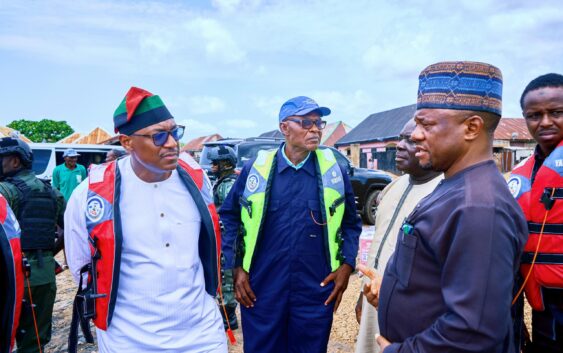
The Director-General of the Nigerian Safety Investigation Bureau (NSIB), Captain Alex Badeh Jr., has raised serious concerns over severe funding deficits that threaten the bureau’s expanding multimodal accident investigation operations.
Under the NSIB Establishment Act of 2022, agencies such as the Nigerian Maritime Administration and Safety Agency (NIMASA) and the Nigerian Railway Corporation (NRC) are required to remit statutory percentages of revenue to the bureau.

Non-compliance has forced the NSIB to operate on deficit budgets, relying heavily on aviation-allocated funds to finance maritime and rail investigations.
Speaking to Aviation Metric from Abuja, Badeh strongly opposed a proposed legislative amendment seeking to reduce the bureau’s statutory allocation from the 5% Ticket Sales Charge (TSC)/Cargo Sales Charge (CSC) pool from 6% to 4%.
He emphasised that the NSIB already receives the smallest share among aviation agencies despite its expanded mandate covering air, rail, maritime, and road transport.
The bureau has faced delayed and irregular disbursements of its current 6% TSC allocation since early 2026.
Lack of funds has prevented the acquisition of essential equipment, notably Remotely Operated Vehicles (ROVs) needed for underwater search, wreckage mapping, evidence recovery, and body retrieval in murky and brackish inland waterways.
Specialised technical training and international expert engagements needed to scale up investigators across rail and maritime divisions have been slowed by fiscal limits, just as rapid response, on-site evidence preservation, and lab analysis capabilities across simultaneous regional incidents face ongoing resource bottlenecks.
The NSIB boss disclosed that the NSIB is currently engaging with the Presidency and the Nigeria Revenue Service (NRS) to establish an independent, sustainable funding formula that decouples the bureau’s operational capabilities from inter-agency remittance disputes.
He said, “13% TSC from the NCAA we share. That’s between us and NCAT, I think. We’re at 6% right now, and they’re at 7%. That’s what you’re asking. We’re at 6% right now, and they’re at 7%. That’s what you’re asking. Recently, yes, I saw the bill. I’m not sure what’s going on, but someone proposed to reduce our 6% to 4%. I’m not sure what the rationale is because they’re trying to increase theirs. And before I go further, I’ll say, well, if you think safety is expensive, try an accident.”
“So, with this proposed reduction, of course, it’s going to negatively affect the NSIB. Now, with regard to the other agencies that are supposed to give the NSIB money or fund it to do its role, you know, everybody has their take and their arguments. Right now, under the presidency, we’re working on a more sustainable funding formula for the NSIB. I’m not sure how that’s going to look, or I can’t speak on how that’s going to look yet.”
“But we are talking with the NRC and the presidency to figure this out. As you know, we’re supposed to get 6% TSC. So, I’m hoping that with the new year and the new budget, once we get a new budget code, and once everything is said and done, and hopefully the government kind of settles, we should be able to have figured out our funding situation. Of course, we all know NIMASA; there’s still a little back and forth, but right now, we’re just working on getting an MOU to work with NIMASA so we can both, you know, do our roles here.”
On safety recommendations, he further stated that, as accident investigators, they conduct no-blame accident investigations, adding that the regulator, the NCAA, enforces NSIB’s safety recommendations.
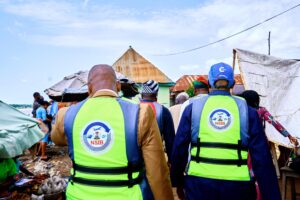
“But to answer your question, it is going to affect us negatively, reducing us from 6% to 4%. I understand the argument that a patient seems to be funding other modes. Since we know it’s all a work in progress, the NSIB is a young agency. The AIB, of course, being older, NSIB now came from AIB”, he added.
Google+
It’s frustrating to see this happening; the lack of coordination between agencies really does impact investigation capabilities.